



Sound Bite
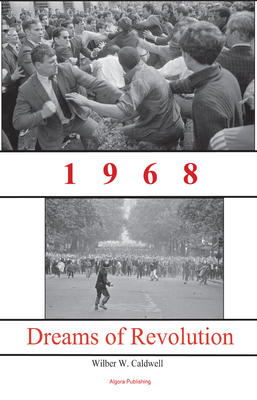
Where did all the 1960s radicalism come from — and what were they thinking? This neat cinéma vérité narrative of the intellectual underpinnings, social conscience, and political and cultural rebellion traces the heartbeat of student uprisings with flashbacks between NY, Frankfurt and Paris.
About the Book
For the two generations who have grown up since Lyndon Johnson was president, the events as well as the thinking behind the revolutionary and romantic pretensions of the Sixties are almost equally unclear. This was the era of the Beatles, the Rolling Stones and the Summer of Love; it was also at the heart of the civil rights and anti-War movements. The year 1968 saw the assassination of Martin Luther King, Jr., and Robert F. Kennedy, the ascendance of the hippies and Yippies, Black Power, Neo-Marxism, and the beginnings of Postmodernism.
When student radicals occupied Columbia University in 1968, they were showing solidarity with student uprisings in Paris and in Frankfurt. This unique novel explores the tensions that were manifest in the student riots in West Germany following the shooting of the student leader Rudi Dutschke, the student revolt at Columbia University, and the tumultuous French May uprising, all of which took place in the spring of 1968.
At the heart of the book lie timely concerns regarding the impotence of liberalism within a self-perpetuating system that is fluid enough to contain the forces that would bring about real change.
Technically a novel, 1968 walks a fine line between fiction and nonfiction. Through its historically faithful storyline, its biographical portrayals of historical figures, and its authentic and accurate intellectual grounding, 1968 follows an entirely documentary agenda.
Well-researched historical characters include Tom Hayden, founder of the US Students for a Democratic Society (SDS), Mark Rudd (SDS chairman at Columbia), ÂRed Rudi,' Daniel Cohn-Bendit (Danny the Red, now a member of the European Parliament), Ted Gold (of the explosive Weathermen), Karl Wolff of the German SDS, Herbert Marcuse (father of the New Left), Theodor Adorno (father of modern Critical Theory), Hannah Arendt, and the ghosts of Walter Benjamin, Charles Baudelaire, and Karl Marx. They interact with a cast of fictional characters in a real-life story of militant politics, cultural upheaval, and intellectual radicalism.
Penetrating questions concerning civil disobedience and cultural hegemony run through the book. Does revolutionary social change spring from a shift in culture, as the hippies saw it? Or does a new culture evolve out of revolutionary action, as posited by Marx and the New Left? What is the proper relationship between theory and practice? Is this the revolutionary moment? Who will lead the revolution now that working people have been seduced into the very fabric of late capitalism?
1968 is historical fiction that illuminates a brief flash of revolutionary spirit in the West and brings into focus the evolving counterculture of the late 60s and early 70s about which we all hear so much and understand so little.
Introduction
Friday, April 12, 1968A dark river of young men flowed down the Hamburger Allee and turned west onto the Mainzer Landstrasse. On the surface, their mood appeared festive. There were banners, shouts and torches, jokes, laughter, and chants of 'Rudi, Rudi, Rudi,' like the familiar rhythms of a sporting event. However, not far beneath the surface, lurked a pervasive tension born of anger, frustration, contempt, and fear, a fear so intense that it soon melted away the veneer of raucous theatrics and exposed a transparently false bravado. In the center of the crowd, Steffi Siegel was still clutching the single-page mimeographed handout that had been stuffed into her hand when they left the university. On it was a list of recent inflammatory Springer Press tabloid headlines: 'Stop the Terror and the Young Reds Now,' 'Do Away with Them,' 'Don't Leave the Dirty Work to the Police.' She could feel the tension bearing down upon her. 'Springer, Nazi!' the crowd began to chant in an effort to muster some new kind of blind courage.Here and there along the way, students with bloodstained shirts sat on the curb, tended and comforted by their girlfriends and fellows. The chanting grew louder as they approached the Allgemeine Zeitung Building where the Springer newspaper was printed. In the last few blocks before the printing plant, the streetlights were out. They grew quiet and walked resolutely on in darkness. They could hear shouting just ahead. Steffi felt a chill and adjusted her scarf. She wore dark jeans, a leather jacket, and a man's short-billed cap with all of her hair tucked up beneath it. Ahead the street was dimly lit by the dull red-brown glow of temporary lighting set up by the police to illuminate the area in front of the printing plant that they were defending. Steffi could see a large crowd of students in the median where the streetcars ran in the center of the wide boulevard. Across the two eastbound lanes on the shadowy sidewalk in front of the plant, she could make out three neat lines of black-uniformed police in full riot gear. Farther along more police were attempting to clear the makeshift barricade that the students had thrown up to block the exit used by the Springer delivery trucks. They were dragging away park benches, sections of metal fences, and all manner of junk that the students had piled there. Off to one side, a small Springer delivery van lay burning on its side. The scene appeared at once surreal and psychedelic — surreal because the red-brown light was dead, depthless, shadowless, and psychedelic because there was a strobe-like quality to the illumination. Flat zombie-like figures seemed to jerk about in slow motion. As Steffi's group approached, the students in the median seemed to gather new energy from their arrival. A police ambulance tried to negotiate the space between the police line and the protestors. A few students blocked its path while others rocked the vehicle in an effort to turn it over. The police suddenly charged. There was a loud shout, and the students rushed to meet the assault. Many of the students in Steffi's group picked up the shout and began to run toward the mêlée.Steffi froze, suddenly overpowered by a strong odor she had never encountered before. It was something unfamiliar, and yet inexplicably she knew exactly what it was. She somehow clearly identified the odious aroma of pure adrenalin and fresh blood, laced with a potentially lethal overdose of testosterone. Steffi had participated in countless protests and demonstrations before, but she had never experienced anything like this. 'This is the mind of the mob, she thought to herself. 'They have surrendered their free will; they have no autonomy, no personal freedom. They have become that which they attack.' She turned sadly and began to walk slowly back toward the university.


Reviews
There are no reviews yet.