




Sound Bite
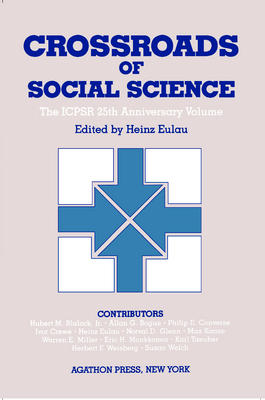
The essays in this collection analyze the successes and failures of the social sciences over the last few decades as well as on their future. The focus of the book is on generic problems, difficulties, and dilemmas in the social sciences that the contributors are uniquely qualified to articulate. Each of them has been intimately involved in the development of one or another discipline in the last thirty years or so; each has made significant contributions to that development in many ways; each has a personal perspective on accomplishments and failures, promises and needs, continuities to be cultivated and opportunities to be seized.
About the Book
If there is much disagreement as to what social science “looks like” or should look like, it is in part due to what the “fact” that not all “social scientists” are social scientists. There are those who, in their attempts to define social science, take recourse to philosophies of science, but philosophies of science, it seems to me, are the business of philosophers and not of scientists. Much as the method of “thick description” differs from the methods of quantitative analysis pursued by the contributors to this volume, there is much wisdom in the reminder of the thick-descriptionist anthropologist Clifford Geertz (1973) that “if you want to understand what a science is, you should look in the first instance not at its theories or its findings, and certainly not at what its apologists say about it; you should look at what the practitioners of it do.”The contributors to this volume are all well-known practitioners reflecting in one way or another on what they as individuals or as members of a social science discipline are doing. There is no lack of apologetic, critical, or programmatic statements in their diagnoses, but they come to these statements as practitioners and not as philosophers. All of them speak from experience in doing theory-driven empirical research, not from the lofty perch of some comprehensive vision that, more likely than not, is built on feet of clay and likely to crumble when the next vision comes along. Yet, there is much heterogeneity in these essays. Reviewers of volumes such as this collection almost invariably complain that the symposium resembles more a potpourri than a symphony, or that the editor has failed to “integrate” the various contributions into some overarching framework. Yet as this book argues, there are many crossroads where social scientists meet, move, halt, or collide, and the contributors to this symposium, while having more in common than not, also differ in their particular interests or concerns. It cannot be otherwise.The Inter-University Consortium for Political and Social Research is the country’s and perhaps the world’s leading center for archiving quantitative data and for utilizing these data through instruction in relevant theories and methods, thus contributing to the development of the social sciences and to studies of their relation to broader trends in the various disciplines. This is their 25th anniversary volume.
Table content
CONTENTS 1. Perspectives on the Federal Convention of 1787 2. Debate, Deadlock, and Issue Resolution in the Convention 3. James Madison and the Origins of the Virginia Plan 4. The Nature of Government in the New Republic 5. The Representation Question: Madison and His Opponents 6. The Role of the Executive in Republican Government 7. Localist Periphery and Nationalist Center: On Restraining Government 8. Small State Fears and the States' Rights Caucus 9. The Brearley Committee Report and a New Northern Majority 10. Summary and Conclusion Notes Bibliography Appendix A: The Data Appendix B: The Virginia Plan Appendix C: The New Jersey Plan Appendix D: Committee of Detail Report Appendix E: The Constitution of the United States Index


Reviews
There are no reviews yet.