




Sound Bite
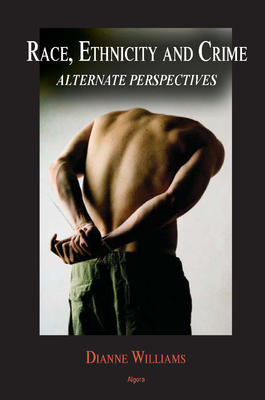
Dr. Williams, a university lecturer in Criminology, offers a course manual for classes in criminology. The book includes a scholarly examination of race, ethnicity and the relationship between definitions and criminalization. She raises the challenging question whether it is, in fact, intolerance that leads to racism.
About the Book
Melting pot or tossed salad? The U.S. criminal justice system may prove to be fueling intolerance rather than enabling society to accommodate racial and ethnic differences.
In addition to information on crime and incarceration rates, White-collar crime, and the 'typical criminal,' the discussion of minorities and public perceptions is set within a broader context including the issues of terrorism and human trafficking, where race and ethnicity are also vital to public perceptions.
This manual is designed for junior colleges and four year colleges, including those offering distance-learning courses. It is a thought-provoking combination of facts and questions. The pedagogical focus is on collaborative, problem-based learning, with foundational support for the development of critical thinking and analytical skills.
Each Chapter includes vignettes featuring the opinions of experts in the field relative to the Chapter being covered. They are classic pedagogical tools that link theory with practice ' a good balance between theory and the real world.
The simple, straightforward approach allows instructors to personalize their coverage of the material, and the text uses extremely effective pedagogical approaches. The Case Study/Critical Thinking issues-and-questions approach at the beginning of each chapter is another important feature that focuses on developing students' soft skills. The objectives are clearly listed at the beginning of each chapter.
Chapter Resources and Key Terms are listed at the end of each chapter. The Controversy sections included in each chapter target analytical and critical skill development in students, not to mention application of a current issue, as does the 'In the news' section which, while making reference and applying theory to current issues, forces students to apply theory, and critically analyze issues.
The author attempts, as much as possible, to rely on facts and figures here (deductive logic) rather than on sentiment. Since the ultimate goal is to encourage student to critique, analyze and formulate their own opinion, every effort has been made to presenting both sides of each argument.
Information
<p>Race, Ethnicity, and Crime: Alternate Perspectives is a comprehensive course manual for college classes in Criminology and Minority Studies. Dr. Williams, a university lecturer in Criminology, includes a scholarly examination of race, ethnicity and the relationship between definitions and criminalization. She explores critical issues such as crime rates, incarceration patterns, white-collar crime, and public perceptions of minorities, while addressing the broader societal impacts of terrorism and human trafficking. Dianne Williams provides a nuanced and thought-provoking analysis of the interplay between race, ethnicity, and the criminal justice system.
This textbook is designed for students, educators, and professionals, the book emphasizes critical thinking, collaborative learning, and the real-world application of theoretical concepts.
A Comprehensive Exploration of Crime and Perception
Williams examines the ways race and ethnicity shape public perceptions of crime and justice. The book challenges stereotypes about the "typical criminal," shedding light on the complexities of white-collar crime and the disproportionate impact of incarceration on minority communities. By connecting these topics to broader issues such as terrorism and human trafficking, the text illustrates the profound influence of race and ethnicity on societal responses to crime at local and global levels.
Problem-Based Learning and Critical Thinking
This book serves as a powerful pedagogical tool, fostering critical thinking and analytical skills. Each chapter begins with case studies and questions that encourage readers to critique and analyze real-world scenarios. “Controversy” sections present opposing viewpoints on complex topics, while the “In the News” feature links theoretical concepts to current events, keeping the material relevant and engaging for students.
Bridging Theory and Practice
Williams effectively links academic theories with practical applications. Vignettes featuring insights from professionals in the field enrich the chapters, providing a grounded understanding of the issues. This balance between abstract concepts and real-world examples ensures that the text is both accessible and insightful, appealing to a wide range of learners and educators.
Accessible and Adaptable for Learning
Written in a clear and approachable style, Race, Ethnicity, and Crime is suitable for use in various educational settings, including junior colleges, four-year institutions, and distance-learning programs. Each chapter includes clear objectives, key terms, and resource sections, making it easy for instructors to tailor their teaching while providing students with a strong foundation for understanding the material.
Addressing Contemporary Issues in Crime and Justice
The book tackles critical and current topics such as racial profiling, systemic bias in the criminal justice system, and media influence on public perceptions of crime. By pairing facts and data with analytical questions, Williams equips students with the tools to engage in informed debates and develop well-reasoned perspectives on these pressing issues.
Who Should Read This Book?
Ideal for students of criminal justice, sociology, and public policy, Race, Ethnicity, and Crime is also a valuable resource for educators, professionals, and policymakers. Its balanced approach and emphasis on real-world relevance make it an indispensable guide for understanding the complex dynamics of race, ethnicity, and crime in today’s criminal justice system.
With its engaging pedagogy, comprehensive coverage, and practical insights, Race, Ethnicity, and Crime: Alternate Perspectives is an essential resource for exploring the multifaceted relationships between race, ethnicity, and the pursuit of justice.




Reviews
There are no reviews yet.